
Object Of Folk Art

17th-Century Bronze Tripod Cauldron. Early Period, Middle Ages, Collections
17th-Century Bronze Tripod Cauldron. Early Period, Middle Ages, Collections



17th-Century Bronze Tripod Cauldron. Early Period, Middle Ages, Collections   17th-Century Bronze Tripod Cauldron. Early Period, Middle Ages, Collections
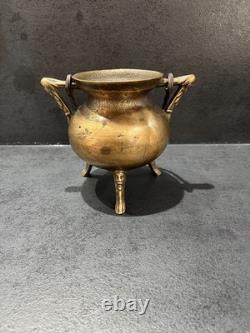
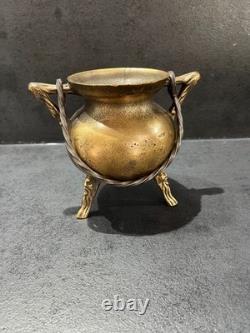
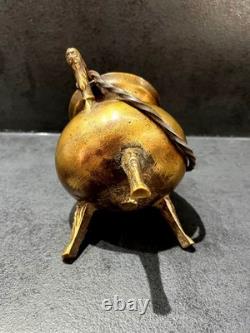
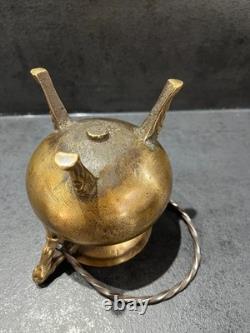
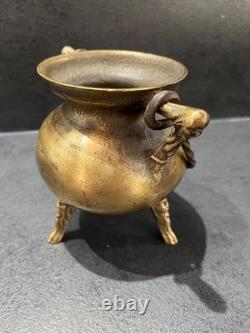
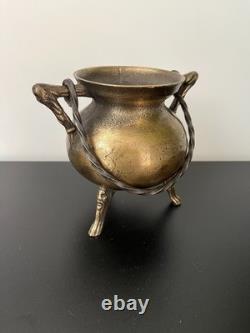
This beautiful object is a miniature three-legged cauldron or apothecary pot made of bronze or brass, typical of Haute Époque production (17th century).

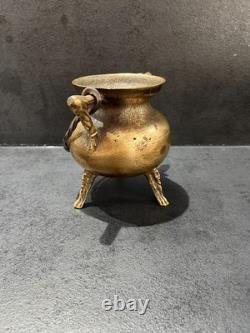
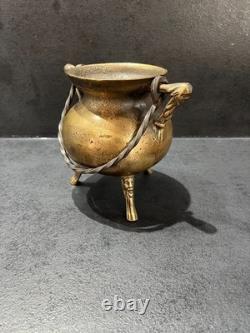
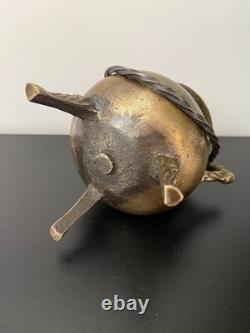
The three feet end in stylized faces, sometimes referred to as mascarons or grotesque heads. This decorative use of human features supports its attribution to folk art or apothecary wares of the Renaissance or Louis XIII period.

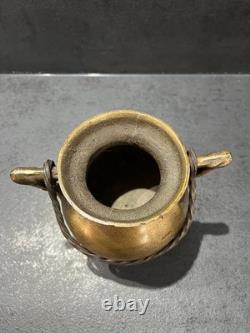
The handle is made of twisted wrought iron, a characteristic feature of authentic pieces from this period.

It is secured to two cast-bronze lugs on either side.

The surface displays a golden patina, with signs of wear and oxidation developed over time, indicating an old casting.

Miniature vessels of this type were generally used by apothecaries to prepare small quantities of ointments or remedies. They could also have been kept as examples of craftsmanship or as decorative folk-art objects.


DIAMETER AT THE NECK: 8.7 cm.


17th-Century Bronze Tripod Cauldron. Early Period, Middle Ages, Collections   17th-Century Bronze Tripod Cauldron. Early Period, Middle Ages, Collections